Carpal Tunnel vs Tendonitis: What Typists Need to Know
Carpal tunnel and wrist tendonitis share symptoms but need different treatments. Learn to tell them apart and find the right typing fix. See key differences.
Carpal Tunnel vs Tendonitis: What Typists Need to Know
Carpal tunnel syndrome and wrist tendonitis have overlapping symptoms — pain, stiffness, discomfort with typing — but different causes, different diagnostic tests, and different treatments. Mistaking one for the other delays the right intervention. This article explains the difference in plain language and identifies which symptoms point toward which condition, so you can have a more informed conversation with a clinician.
What Is Carpal Tunnel Syndrome?
Carpal tunnel syndrome is compression of the median nerve as it passes through the carpal tunnel — a rigid channel in the wrist about the diameter of a thumb. The tunnel is formed by the carpal bones on three sides and the transverse carpal ligament across the top. When the tunnel narrows — from wrist extension, fluid retention, or anatomical variation — the median nerve is compressed against the ligament. The nerve signal to the thumb, index finger, middle finger, and half of the ring finger becomes disrupted.
Carpal tunnel is primarily a nerve problem. The tendons that run through the tunnel alongside the nerve may be irritated secondarily, but the primary pathology is nerve compression.
What Is Wrist Tendonitis?
Tendonitis is inflammation of a tendon — the fibrous cord that connects muscle to bone. In the wrist, the most common tendonitis in typists affects the flexor tendons (the tendons that curl the fingers toward the palm) or the extensor tendons (the tendons that lift the fingers). The inflammation is caused by repetitive loading of the tendon — thousands of keystrokes per day, each one pulling the tendon through its sheath.
A specific form of wrist tendonitis common in typists and mouse users is De Quervain’s tenosynovitis — inflammation of the tendons on the thumb side of the wrist. The Finkelstein test (tuck the thumb into the palm, wrap the fingers over it, and tilt the wrist toward the pinky side) reproduces sharp pain at the base of the thumb. This is a classic sign of De Quervain’s.
Tendonitis is primarily a tendon problem. The nerve may be irritated secondarily if the inflamed tendon swells and compresses the nerve, but the primary pathology is tendon inflammation.
Symptom Comparison Table
| Symptom | More likely carpal tunnel | More likely tendonitis |
|---|---|---|
| Tingling or numbness in thumb, index, middle finger | Yes — hallmark symptom | Rare — only if swelling compresses nerve |
| Sharp localized pain at the base of the thumb | Rare | Yes — De Quervain’s |
| Pain that wakes you at night | Yes — classic carpal tunnel | Rare |
| Pain worse with gripping or twisting (jar lid, doorknob) | Sometimes | Yes — tendon loading |
| Pain that improves with rest from typing within hours | Sometimes | Sometimes |
| Morning stiffness that eases after 30 minutes | Sometimes | Yes — tendon stiffness |
| Visible swelling along a tendon line | Rare | Yes |
| Weakness in grip or clumsiness of the thumb | Yes — motor nerve involvement | Rare |
| Pinky finger affected | No — ulnar nerve, not median | No — different nerve/tendon |
The Timing Clue
The single most useful diagnostic clue is timing:
- Carpal tunnel pain is often worse at night. The reduced blood flow during sleep allows nerve symptoms to manifest. A person with carpal tunnel may wake up with tingling or burning in the thumb and first two fingers and shake the hand to relieve it.
- Tendonitis pain is often worse in the morning and improves with movement. The inflamed tendon stiffens overnight. The first 30 minutes of typing or gripping in the morning are the most painful. The pain eases as the tendon warms up and synovial fluid circulates.
- Carpal tunnel pain is made worse by sustained wrist extension or flexion. Holding the phone to the ear, gripping a steering wheel, or typing on a flat keyboard for more than 30 minutes triggers symptoms.
- Tendonitis pain is made worse by repetitive loading of the specific tendon. Pinching, gripping, twisting, or typing with excessive force triggers pain in the specific tendon line, not the whole hand.
Diagnostic Tests (Clinician-Administered)
Two quick in-office tests help differentiate the conditions. These are not self-diagnosis tools. They are administered by a clinician who has examined your wrist.
- Phalen’s test. The patient holds the wrists in full flexion (fingers pointing down, backs of the hands pressed together) for 60 seconds. Reproduction of tingling or numbness in the thumb, index, or middle finger suggests carpal tunnel syndrome. The test compresses the carpal tunnel and increases pressure on the median nerve.
- Finkelstein’s test. The patient tucks the thumb into the palm, wraps the fingers over the thumb, and tilts the wrist toward the pinky side. Sharp pain at the base of the thumb suggests De Quervain’s tenosynovitis. The test stretches the inflamed tendons on the thumb side of the wrist.
Neither test is definitive. Both can produce false positives and false negatives. A nerve conduction study (NCS) — electrodes measuring how fast electrical signals travel through the median nerve — is the gold standard for confirming carpal tunnel. Ultrasound can confirm tendonitis by showing fluid around an inflamed tendon sheath.
Why the Distinction Matters
Carpal tunnel syndrome and tendonitis are treated differently:
- Carpal tunnel may respond to wrist splinting at night (keeping the wrist in neutral position during sleep), ergonomic changes (keyboard angle, desk height), and corticosteroid injections in moderate cases. Severe or persistent cases may require carpal tunnel release surgery — a 15-minute procedure with a 2-4 week recovery.
- Tendonitis responds to rest, ice, anti-inflammatory medication, and activity modification (reducing the specific movement that loads the tendon). Corticosteroid injections are used for persistent cases. Surgery is rare and reserved for cases that do not improve after 6-12 months of conservative treatment.
Treating carpal tunnel as tendonitis — resting and icing while the nerve continues to be compressed — delays the intervention that actually relieves the compression. Treating tendonitis as carpal tunnel — splinting at night and considering surgery for an inflamed tendon — subjects the patient to an unnecessary procedure.
When to See a Clinician for Either Condition
The boundary between “try ergonomic changes first” and “book an appointment” is:
- Persistent numbness or tingling in the thumb, index, or middle finger — book within 2-4 weeks
- Night-time symptoms that wake you from sleep — book within 1-2 weeks
- Weakness in grip, dropping things, difficulty with fine motor tasks — book within 1 week
- Visible swelling along a tendon line with redness or warmth — book within 1 week
- Symptoms that have not improved after 4 weeks of ergonomic changes and break-cadence adherence — book within 2 weeks
The right clinician: primary care physician for initial evaluation and referral to a hand-and-wrist orthopedic specialist or a neurologist for nerve conduction studies. Do not self-refer to a surgeon without a formal diagnosis.
Summary
Carpal tunnel is nerve compression in the wrist that produces tingling and numbness in the thumb and first two fingers, often worse at night. Tendonitis is inflammation of a tendon that produces sharp localized pain, often worse in the morning and with specific movements. They share a wrist. They share some early symptoms. They need different treatments. If you are unsure which you have, book a clinician appointment. The distinction is worth getting right.
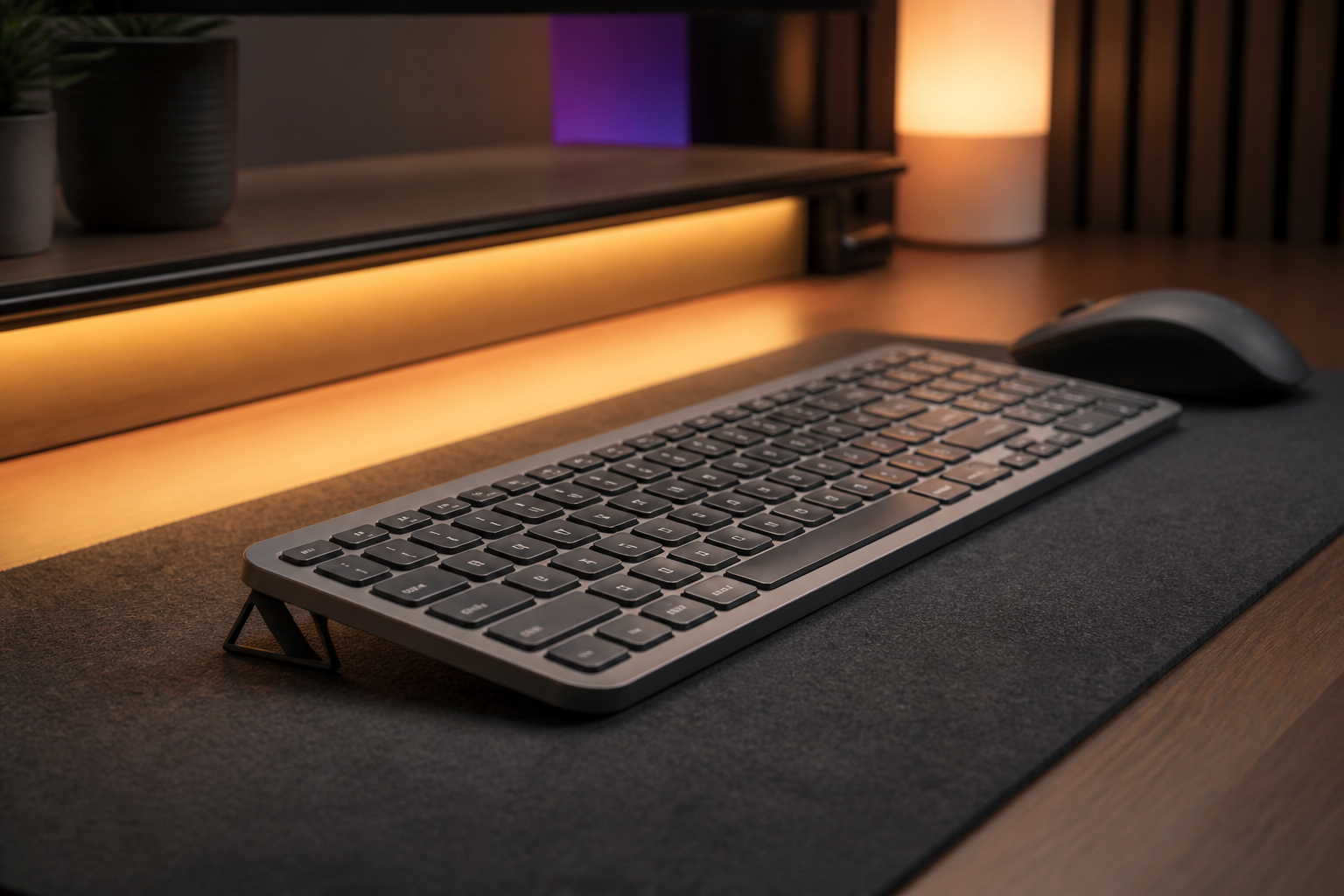
Fix the keyboard angle while you investigate the symptoms. KeyRiser adds 15° rear lift →
Related: Wrist Pain Prevention Guide | Tingling Hands When Typing | Forearm Pain When Typing
Frequently Asked Questions
Q: Can I have both carpal tunnel and tendonitis at the same time?
A: Yes. The inflamed tendon can swell and secondarily compress the median nerve in the carpal tunnel. This is called “secondary carpal tunnel.” Treating the tendonitis — reducing the inflammation — often relieves the nerve compression as well. A clinician can differentiate primary from secondary nerve compression with nerve conduction studies.
Q: Does typing cause carpal tunnel syndrome?
A: Typing with sustained wrist extension — the classic flat-keyboard posture — contributes to carpal tunnel by increasing pressure in the carpal tunnel. It is a contributing factor, not necessarily the sole cause. Anatomical variation (smaller carpal tunnel), fluid retention, and metabolic conditions also contribute. The keyboard angle is the one variable you can control.
Q: How long does wrist tendonitis take to heal?
A: Mild wrist tendonitis — caught early, with activity modification and rest — typically heals in 2-6 weeks. Moderate tendonitis — several months of symptoms before treatment — may take 3-6 months. Severe or chronic tendonitis — years of symptoms — may not improve over time for some people without medical intervention. The earlier you address it, the shorter the recovery.
Q: Can I keep typing with carpal tunnel or tendonitis?
A: With the right ergonomic changes — neutral wrist position, proper desk height, strict break cadence — most people with mild to moderate symptoms can continue typing. If typing reproduces sharp pain or numbness within minutes, stop and see a clinician. Continuing to type through nerve symptoms risks permanent damage.
Ready for a Better Typing Angle?
Check KeyRiser on Amazon and confirm compatibility with your MX Keys model.
Buy Now - $9.99